The newest, weirdest, most futuristic tow sport. A board with a wing underneath that lifts you out of the water entirely. Steeper learning curve than wakesurf — and twice the addiction once you click it.
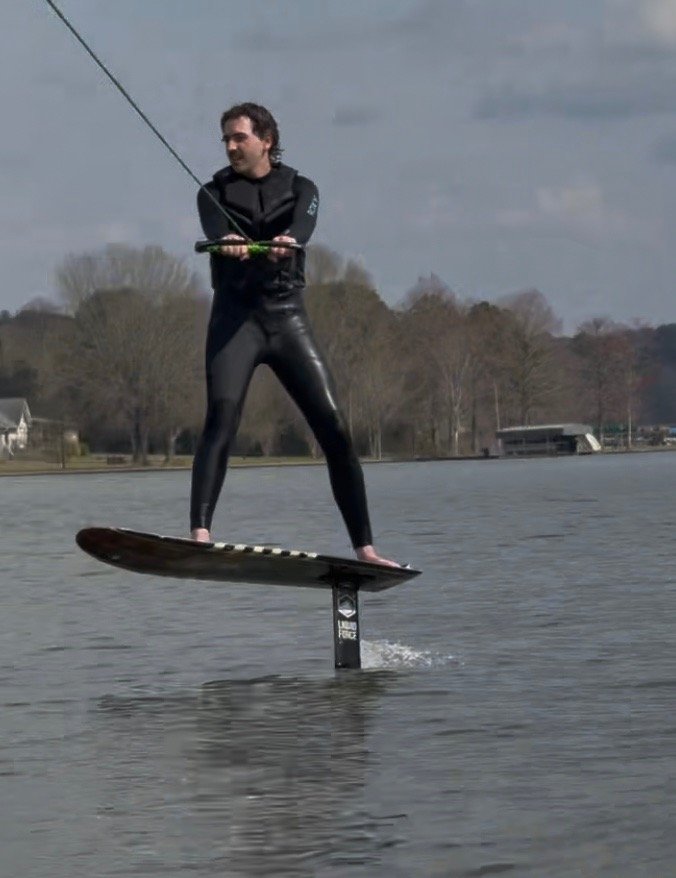
A hydrofoil is a board with a vertical mast and a horizontal wing mounted underneath. Above a certain speed, the wing generates lift and pulls the board out of the water — you fly. The board is suspended 18–30 inches above the surface, silent, smooth, with zero spray and almost no resistance.
Once you find the lift point, hydrofoiling is the closest thing to surfing weightless. It's also harder to learn than wakesurfing — you'll fall a lot the first day, then it suddenly clicks and you'll wonder how you ever did anything else.
Hydrofoiling is harder than wakesurfing. You'll fall — a lot — on day one. Expect bruises, a sore neck, and many breaches (the board shooting up out of the water). That's normal. We use beginner-friendly wing setups that breach more gradually and forgive overcorrection.
If you've never wakesurfed and you're trying hydrofoil cold, expect a longer learning curve. We'd recommend starting with a wakesurf lesson and adding hydrofoil time once you're comfortable on the water.
If you've never been on a board behind a boat, yes — it builds the rope/board fundamentals you'll need for foiling. If you've wakesurfed or wakeboarded before, you can jump straight to hydrofoil.
Like all tow sports, there's risk. The foil itself has fins that can cut if you fall on them — we cover technique on day one and use protective gear. Helmets recommended. Most injuries are minor bruises from falls. Insurance options available.
Generally we recommend 12+ for hydrofoil — it requires more weight and core strength than wakesurfing. We'll evaluate based on the kid and parent's input.